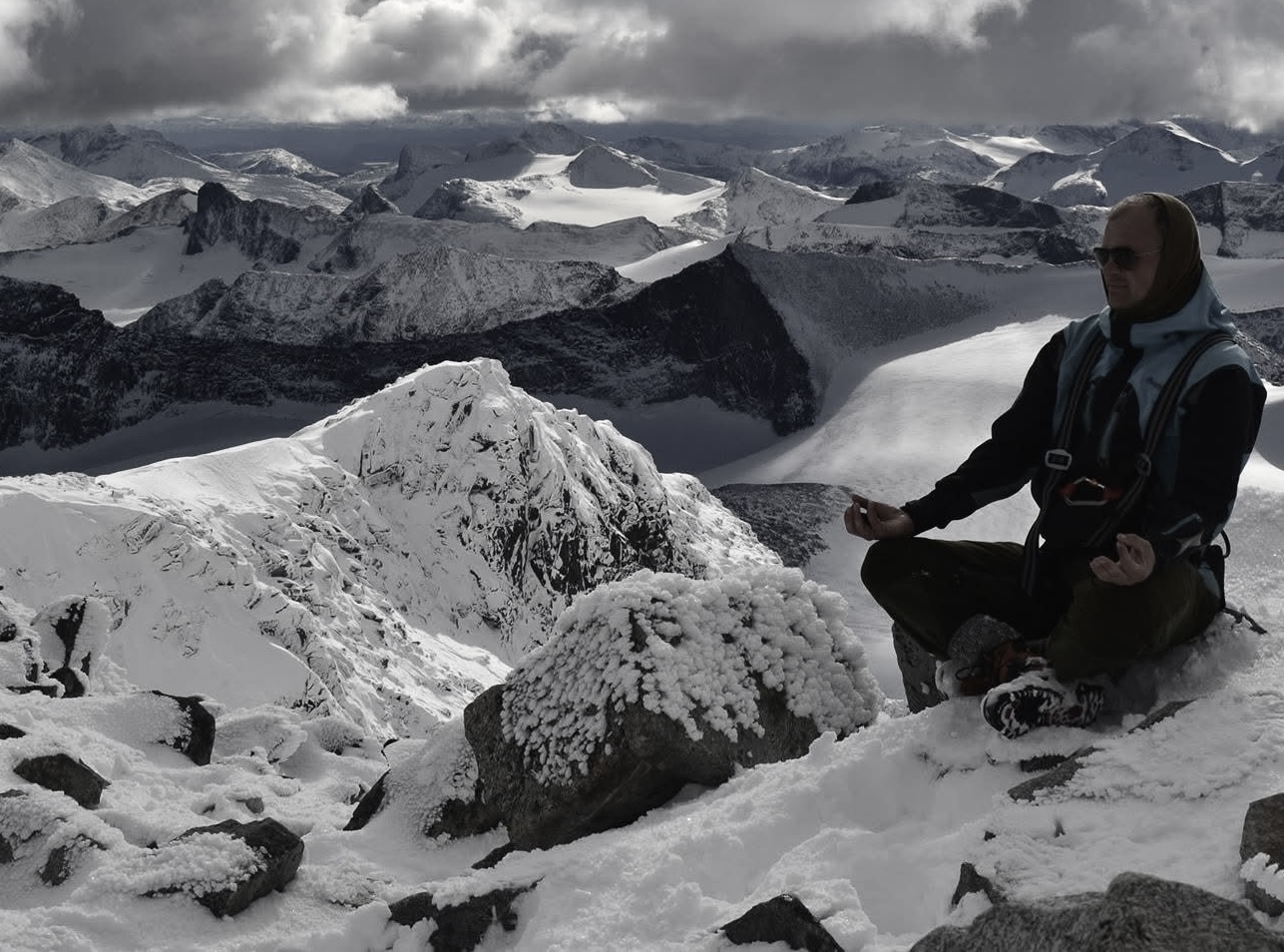
For more than two decades, I have explored a simple question:
What helps people return to themselves?
That question has taken me through years of practice, study, teaching and personal exploration.
It has also changed the way I understand what it means to grow, to heal and to live.
THE WORK BEGAN IN MY OWN LIFE
My interest in this work did not begin in a classroom.
It began in my own life.
Like many people, I spent years searching for clarity, healing, direction and a deeper sense of peace.
I looked outside myself for answers. I believed the next breakthrough might finally bring me where I wanted to be.
Some of the most important lessons, however, came through meeting my own suffering, confusion and uncertainty.
Over time, I began to understand that lasting change was less about fixing myself and more about developing the capacity to stay present with my experience.
That understanding continues to shape both my life and my work.
A LIFE OF PRACTICE
My path has taken me through very different environments.
I have taught meditation in prisons, led retreat centres in the mountains, and worked with people navigating uncertainty, transition and significant life changes.
My background includes coaching, yoga, meditation, breathwork and contemplative practice.
Across these settings, I have been interested in the same thing: what helps people meet themselves and their lives with greater honesty, presence and freedom?
The answer has never been one technique or one universal method.
Different people need different things at different moments.
My work draws on this breadth of experience, while beginning with the person in front of me.
WHAT I HAVE COME TO UNDERSTAND
For years, I believed transformation came through breakthroughs.
Today, I see it differently.
Understanding yourself matters. So does having the right tools. But neither guarantees that you can meet a difficult moment differently when it arrives.
The deeper work is learning to recognise what is happening within you, remain present when things become uncomfortable, and make choices that reflect what genuinely matters.
Sometimes that begins with settling the nervous system.
Sometimes it requires honest reflection, a different perspective, or the willingness to face something you have been avoiding.
There is no single tool for every situation.
What matters is developing the capacity to meet your life rather than continually reacting to it.
HOW I APPROACH THE WORK
My broader work is built around three connected capacities:
PRESENCE
Being here enough to experience yourself and your life as they are.
RESILIENCE
Developing the capacity to remain present when life becomes difficult, uncertain or uncomfortable.
CREATION
Using that presence and capacity to choose, build and live in ways that reflect what is genuinely yours.
These are not stages you complete once and leave behind. They are capacities we continue to develop throughout life.
I draw on many practices and perspectives to support this process. One framework I often use is:
REGULATE → STAY → CREATE
It is one of the tools in my work, not the whole of it.
The intention is not to give you another system to depend on. It is to help you develop greater trust in your own capacity to meet what life asks of you.
TRAINING AND EXPERIENCE
My work is informed by more than two decades of meditation and contemplative practice, alongside formal training and practical experience.
My background includes:
- Certified Profesional Co-Active Coach (CTI)
- More than two decades of meditation and contemplative practices
- 500-hour Hatha Yoga Teacher
- 900-hour Elemental Yoga Therapist
- 200-hour Kundalini Yoga Teacher
- Zen Thai Flow Practitioner
- Goal Mapping Practitioner
I bring these experiences into my work without assuming that one tradition, technique or framework holds every answer.
Practice provides a foundation. Experience teaches us how to work with what is actually happening.
READY TO EXPLORE YOUR NEXT STEP?
You do not need another set of answers to collect.
Sometimes the next step is having a space to slow down, understand what is happening, and discover a different way forward.
If that is where you are, we can begin with a conversation.